Warranty Period and Limitation of Warranty Litigation


Judge of Commercial Court of Shanghai No.1 Intermediate People’s Court
Wu Huiqiong, Senior Judge III
In this small class of the Civil Code, Wu Huiqiong, a judge of the Commercial Court of Shanghai No.1 Intermediate People’s Court and a third-level senior judge, discussed the warranty period and the limitation of warranty litigation.
Hello, I’m Wu Huiqiong from Shanghai No.1 Intermediate People’s Court. Both the warranty period and the limitation of action are important reasons for the guarantor’s exemption and defense, and they are easy to be confused in practice. The Civil Code has also made many adjustments to the original provisions of the warranty period and the limitation of action.
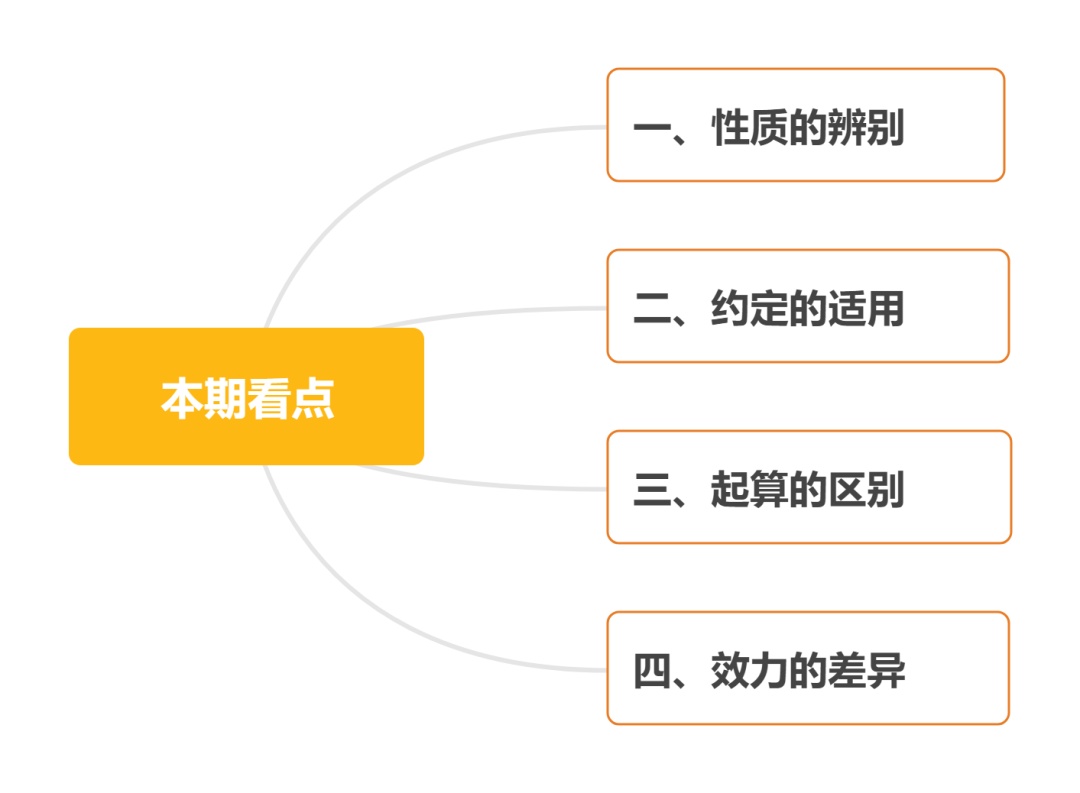
Therefore, today, I take the difference between the warranty period and the limitation of action as the starting point, and specifically discuss how to apply them in practice. It is divided into four parts:
one
Discrimination of nature
First of all, let’s look at the nature of the warranty period and the limitation of action.
Paragraph 1 of Article 692 of the Civil Code stipulates that the guarantee period shall not be suspended, interrupted or extended. Everyone knows that the statute of limitations has been suspended, interrupted and extended. The reason why they are different is that they are different in nature.
There are three different opinions about the nature of the guarantee period: the guarantee period belongs to the limitation of action, scheduled period and special scheduled period. In practice, most people think that the nature of the guarantee period belongs to scheduled period.
So is this the case? The Supreme Court’s Interpretation of Judicial Interpretation of Civil Code Guarantee System (Part III) points out that the guarantee period can be agreed by the parties, and there is no suspension, interruption or extension, so it is different from the limitation of action. Scheduled period, as a legal period, does not allow the parties to agree, and the right of formation is destroyed after the expiration of scheduled period, so there are essential differences between scheduled period and the guarantee period.
Thus, the guarantee period has its own particularity, and it can’t be simply classified as statute of limitations or scheduled period.
two
Application of agreement
The second difference between the two is whether the parties are allowed to agree. Paragraph 2 of Article 692 of the Civil Code stipulates that the creditor and the guarantor may agree on the guarantee period. According to Article 197 of the Civil Code, the period, calculation method and reasons for suspension and interruption of the limitation of action are stipulated by law, and the agreement of the parties is invalid. Thus, the guarantee period can be agreed, but the limitation of action can only be legal.
What needs to be reminded here is that the Civil Code’s handling of unclear agreement during the guarantee period is different from the original provisions.
Paragraph 2 of Article 32 of the original Judicial Interpretation of the Guarantee Law stipulates that if the guarantee contract stipulates that the guarantor shall bear the guarantee responsibility until the principal and interest of the principal debt are paid off, it is deemed that the agreement is unclear, and the guarantee period is two years from the date of the expiration of the principal debt performance period. "Civil Code" unifies six months from the date of expiration of the performance period of the principal debt, regardless of whether the guarantee period is not agreed or not. Article 32 of the Supreme People’s Court’s Interpretation on the Application of the Guarantee System of the Civil Code of People’s Republic of China (PRC) reiterated this.
three
The difference between the initial calculation
The third difference between the two lies in the way of starting calculation.
Combined with the following picture, let’s take a look at how to calculate the guarantee period and limitation of action of joint and several guarantees and general guarantees respectively.
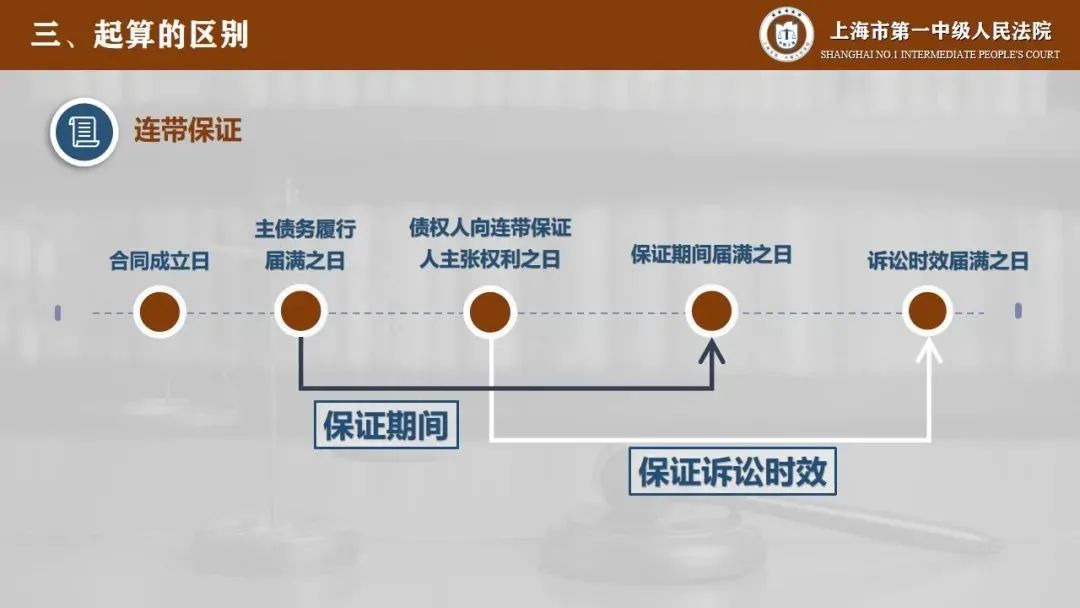
According to the provisions of Article 692 of the Civil Code, the guarantee period of joint guarantee shall be counted from the date when the parties have agreed, and from the date when the performance period of independent debt is not agreed. According to the second paragraph of Article 694 of the Civil Code, the limitation of action for joint and several guarantees starts from the date when the creditor requests the guarantor to assume the guarantee responsibility. It can be seen that the limitation of action starts after the guarantee period.
Similarly, during the guarantee period of general guarantee, the parties have agreed to start from the agreement, and if there is no agreement, it will start from the date when the independent debt performance period expires.
According to the first paragraph of Article 694 of the Civil Code, the limitation of action for general surety shall be counted from the date when the guarantor’s right to refuse to undertake surety liability is extinguished. Different from the provisions of Article 34 of the judicial interpretation of the original guarantee law, this article stipulates that it shall be counted from the date when the judgment or arbitral award takes effect.
The main difference between the two is that the Civil Code considers the execution period after the judgment or ruling takes effect, so as to prevent the situation that the debtor’s property has not been executed completely, but the limitation of action of the creditor against the guarantor has expired.
So is it true that no matter how long it is implemented, the limitation of action of the creditor of the general guarantee against the guarantor has not been counted? Article 28 of the Interpretation of the Supreme People’s Court on the Application of the Guarantee System of the Civil Code of People’s Republic of China (PRC) clearly stipulates that in general guarantee, the creditor shall apply for compulsory execution of the debtor’s property according to the effective legal documents, and the starting time of the limitation of action for debt guarantee shall be determined according to the following rules:
(1) The people’s court has made an order to terminate this execution procedure, counting from the date when the order is served on creditors; (2) If the people’s court fails to make a ruling to terminate the execution procedure within one year from the date of receiving the application for execution, the calculation shall start from the date of receiving the application for execution for one year, unless the guarantor has evidence to prove that the debtor still has property available for execution.
Therefore, it is clear that the judicial interpretation is limited to one year. If there is still no result after more than one year of implementation, the statute of limitations of general guarantee should start to count, rather than indefinitely delay.
four
Difference in effectiveness
The fourth difference between them lies in the effect, which is reflected in the effect on people, the effect after the expiration of the time limit and the effect of withdrawing the lawsuit.
01
Let’s take a look at the difference in personal effect. If there are multiple guarantors, the creditor claims rights from one of them, is the corresponding effect naturally equal to that of other guarantors?
Article 29 of the Supreme People’s Court’s Interpretation on the Application of the Guarantee System of the Civil Code of People’s Republic of China (PRC) stipulates that the creditor’s rights to some guarantors are not as good as those of other guarantors. The limitation of action is different. According to Article 15 of the Provisions of the Supreme People’s Court on Several Issues Concerning the Application of the Limitation of Action System in the Trial of Civil Cases, in the case of joint and several guarantees, each guarantor bears joint liability. As long as the creditor claims the right to one of them, the legal effect of the interruption of the limitation of action will also occur to other guarantors.
02
Let’s look at the difference in effectiveness after the expiration of the time limit.
According to the provisions of Article 693 and Article 701 of the Civil Code, if the creditor fails to claim his rights within the guarantee period or the limitation of action, the guarantor has the right to refuse to perform.
However, if the guarantor signs, seals or fingerprints the creditor’s written notice requesting to assume the guarantee responsibility after the expiration of the time limit, does the guarantee period or limitation of action need to be recalculated?
Paragraph 2 of Article 34 of the Supreme People’s Court’s Interpretation on the Application of the Guarantee System in the Civil Code of People’s Republic of China (PRC) stipulates that if the creditor fails to claim the right after the expiration of the guarantee period, which leads to the elimination of the guarantee liability, if the guarantor signs, seals or fingerprints the written notice requiring the creditor to assume the guarantee liability, the creditor still has no right to ask the guarantor to continue to assume the guarantee liability unless there is evidence to prove that a new guarantee contract has been established.
According to the "Reply of the Supreme People’s Court on the Legal Effect of the Borrower’s Signature or Seal on the Dunning Notice beyond the limitation of action", if the guarantor signs or seals on the dunning notice for the guarantee beyond the limitation of action, it will be regarded as a reconfirmation of the secured debt and the limitation of action will be recalculated.
The principle of this difference is expounded in the Supreme People’s Court’s reply. Let’s take a look. When the limitation period expires, only the guarantor can obtain the right of defense after the limitation period, but it does not have the effect of eliminating the relationship between creditor’s rights and debts. The guarantor’s signature or seal on the dunning notice can be regarded as giving up the right of defense after the limitation period, which leads to the restart of the limitation period.
Upon the expiration of the guarantee period, the legal consequences of the elimination of the relationship between creditor’s rights and debts will occur. The guarantor’s signature or seal on the dunning notice only has the function of proving that the guarantor has received the dunning notice, which is not enough to confirm that the guarantor continues to bear the guarantee responsibility. Therefore, the key lies in the different effectiveness of the two after the expiration of the time limit. The guarantee period leads to the elimination of rights, while the limitation of action only obtains the right of defense, and the rights are not eliminated.
03
Third, how to determine the effectiveness of the creditor’s withdrawal after suing within the guarantee period? Is it the same as the effect that the creditor withdraws the lawsuit after suing within the limitation of action?
According to Article 12 of the Provisions of the Supreme People’s Court on Several Issues Concerning the Application of the Limitation System in the Trial of Civil Cases, the limitation of action is interrupted from the date of filing a complaint or oral prosecution. Then, according to the provisions of Article 195 of the Civil Code, the limitation of action is guaranteed to be recalculated from the date when the ruling on withdrawal is served.
However, the effect of withdrawing the lawsuit during the guarantee period is different. Article 31 of the Supreme People’s Court’s Interpretation on the Application of the Relevant Guarantee System in the Civil Code of People’s Republic of China (PRC) stipulates that the creditor who generally guarantees withdraws the lawsuit after suing the debtor during the guarantee period, and the creditor fails to sue again before the expiration of the guarantee period, the guarantor will no longer bear the guarantee responsibility.
That is to say, if the creditor of the general guarantee claims his rights within the guarantee period and then withdraws his lawsuit, if he does not claim again, it will be regarded as not claiming, and the guarantor will no longer bear the responsibility. Then, the article also stipulates that if the creditor of joint guarantee withdraws the lawsuit after suing the guarantor within the guarantee period, and a copy of the complaint has been served on the guarantor, the people’s court shall hold that the creditor has exercised his rights to the guarantor within the guarantee period.
That is to say, even if the creditor of joint guarantee withdraws the lawsuit, as long as the copy of the complaint has been served on the guarantor, it is considered that the creditor has claimed the right, which is different from the general guarantee.
The above is the main difference between the warranty period and the statute of limitations, including their different nature, that is, the warranty period is not a statute of limitations, but a special scheduled period; Second, agreement is allowed during the guarantee period, but not during the limitation of action; Third, the starting point of the guarantee period and the starting point of the limitation of action are different, with the guarantee period starting first and the limitation of action coming later; Fourth, there are differences in the effectiveness of the two. Specifically, the creditor’s claim to a guarantor during the guarantee period does not necessarily extend to other guarantors, and the limitation of action can have retrospective effect; Secondly, after the expiration of the guarantee period, the guarantor’s signature or seal on the written notice of the creditor’s request to assume the guarantee responsibility does not lead to the recalculation of the guarantee period, but it can lead to the recalculation of the limitation of action; Finally, if the creditor withdraws his lawsuit after filing a lawsuit within the limitation of action, the limitation of action will be interrupted, but if he withdraws his lawsuit after filing a lawsuit within the guarantee period, for the general guarantee, if the creditor does not claim again, the guarantor does not need to bear the guarantee responsibility. For the joint guarantee, if a copy of the complaint has been served on the guarantor, it is deemed that the creditor has claimed the rights within the guarantee period.
Source | Shanghai No.1 Intermediate People’s Court
Author: Wu Huiqiong
Editor | Qiu Yue
Statement | Reprint please indicate that it is from "Pujiang Tianping" WeChat official account.
Shangguan author: Pujiang Tianping