Teacher Qian Zhiliang, a famous teacher of Beijing Normal University, pointed out:
Criticism doesn’t have to be so harsh. Only by mastering the right methods can your criticism be accepted by children.
Good criticism has these five steps.
The first step: praise should be public and criticism should be private.
The words "public praise, private criticism" are very simple, and many parents understand the truth, but once they see that their children have done something wrong, they simply ignore and criticize them.
Although children are young, they still have self-esteem. Public criticism will cruelly destroy children’s self-esteem and turn them into people with low self-esteem.
Children with low self-esteem have been looking at themselves with negative eyes all their lives and living in the evaluation of others forever. The first thing that comes to mind when something happens is to retreat, so it is difficult to face life positively.
Seeing such a video is very emotional.
In the restaurant, a mother seriously questioned her daughter: Why can’t you do such a simple topic?
The more she talked, the more angry she became. She asked her daughter to stand aside: Are you a pig brain? Such a short memory!
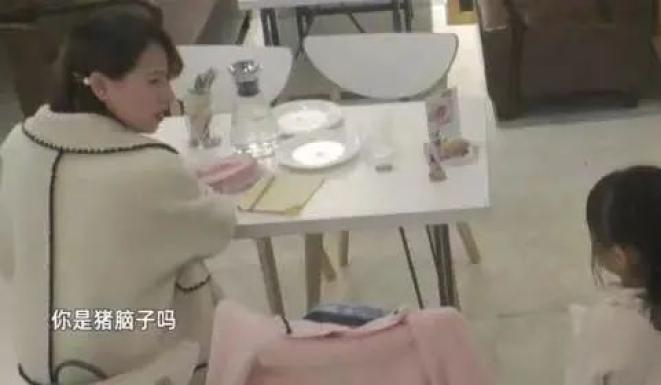
The child has red eyes. It was not until her mother went out to answer the phone that her daughter finally breathed a sigh of relief.
At this time, a mother at the next table pulled the girl aside and said softly:
In this world, there are no stupid children. You are not stupid at all.
Mom wants you to be better and become the best child in the world, so mom is a little anxious.
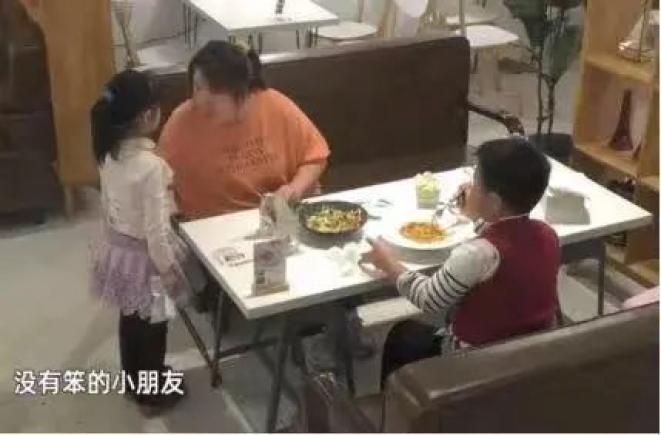
A wise mother knows how to zip up when a child makes a mistake and say less, but when the child does well, put on the horn and praise loudly.
Step 2: Replace criticism with encouragement.
Hong Lan, a doctor of psychology in Taiwan Province, has a study: There is a causal cycle between people’s ideas and behaviors.
The brain produces ideas-ideas guide behaviors-behaviors produce results-and results change the brain.
Therefore, when parents have been criticizing their children for being stupid, their brains will have a concept of "I am really stupid", so they are really stupid.
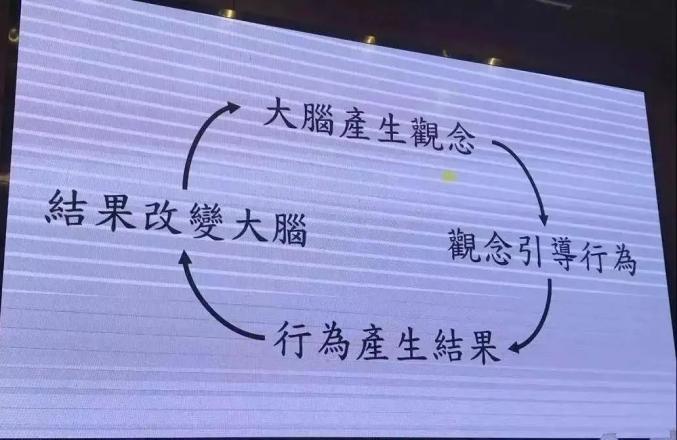
When we change our tone of voice and put it another way, the ending will be completely different.
Every child needs to be "seen" in the process of growing up, which breeds infinite power from the deep heart and pushes them forward.
Step 3: Criticism can be serious, but you can’t lose your temper.
When many parents criticize their children, they will have strong negative emotions, and even say something too radical.
Many times, we all think that children can remember when they speak harshly and with a heavier tone.
But what children remember is only our anger, and what they are afraid of is only the abuse and blame that roared with anger.
Only by being practical and serious but not radical can we achieve the goal of education.
Step 4: Remember emotional comfort after criticism.
When a child was young, he was very dependent on his mother. The emotional connection he got from his mother was the biggest source of his sense of security.
And when his mother criticizes him and is unhappy, the child will think that his mother doesn’t love me.
Once children feel this way, they will lose their sense of security, which is the fracture of psychological connection.
As parents, after criticizing children, we should give them timely emotional comfort and let them understand that we love you only because you are our child and have nothing to do with others.
Good criticism must have timely emotional comfort, give children a sense of security and tell them that we will love you unconditionally.
Step 5: Give your child feasible suggestions for correction.
It is our parents’ responsibility to help our children make progress and take every step of their lives well.
Criticism is to tell them what they have done wrong. However, it is far from enough to know. We should let them know what is right.
Therefore, it is necessary to give children suggestions and hopes for correction, let children think about how to solve problems, and urge them to put them into action, such as:
If you accidentally break your mother’s beloved vase, you should take the initiative to apologize to your mother;
Quarrel with friends and teach children how to get back together with them;
Spill the water in the glass and wipe the floor yourself.
I have seen the story of a net friend.
When I was young, I was naughty and ignorant, and often had conflicts with my friends. Every time, he would go home crying and tell his father that he hoped his father could help him out.
Dad always said to him, then think about it yourself. What should you do? Or tell him that you should do this and you shouldn’t do that.
At that time, he was very resentful of his father, and felt that his father was eccentric and unwilling to help him. For this reason, he also had a cold war with his father for a long time.
When he grew up and struggled in the society alone, he finally understood his father’s painstaking efforts. He said: I am grateful to my father. When I was young, whenever I did something wrong or had a problem, I didn’t help me, but taught me how to do it.
Of course, in this process, parents must accompany them and supervise their children’s corrective behavior.
Don’t underestimate "criticism", it is not a trivial matter, not a simple sentence or a truth, but a great wisdom.
I am deeply impressed.
Good criticism is more than just telling children "you did something wrong".
Good criticism has scale, temperature and strength:
When criticizing, it is a measure to be serious and profound, and not to lose your temper;
After the criticism, hug the child and tell him that we love him, not the temperature;
It is strength to face mistakes with children and be brave in correcting them.
An encouragement, a hug, a guidance, together with children, keep moving forward on the road of growth, so that good criticism can become a booster for children’s growth.
Source: Heart Coast Psychological Studio
Original title: "Family education | How to criticize children’s mistakes ~"